
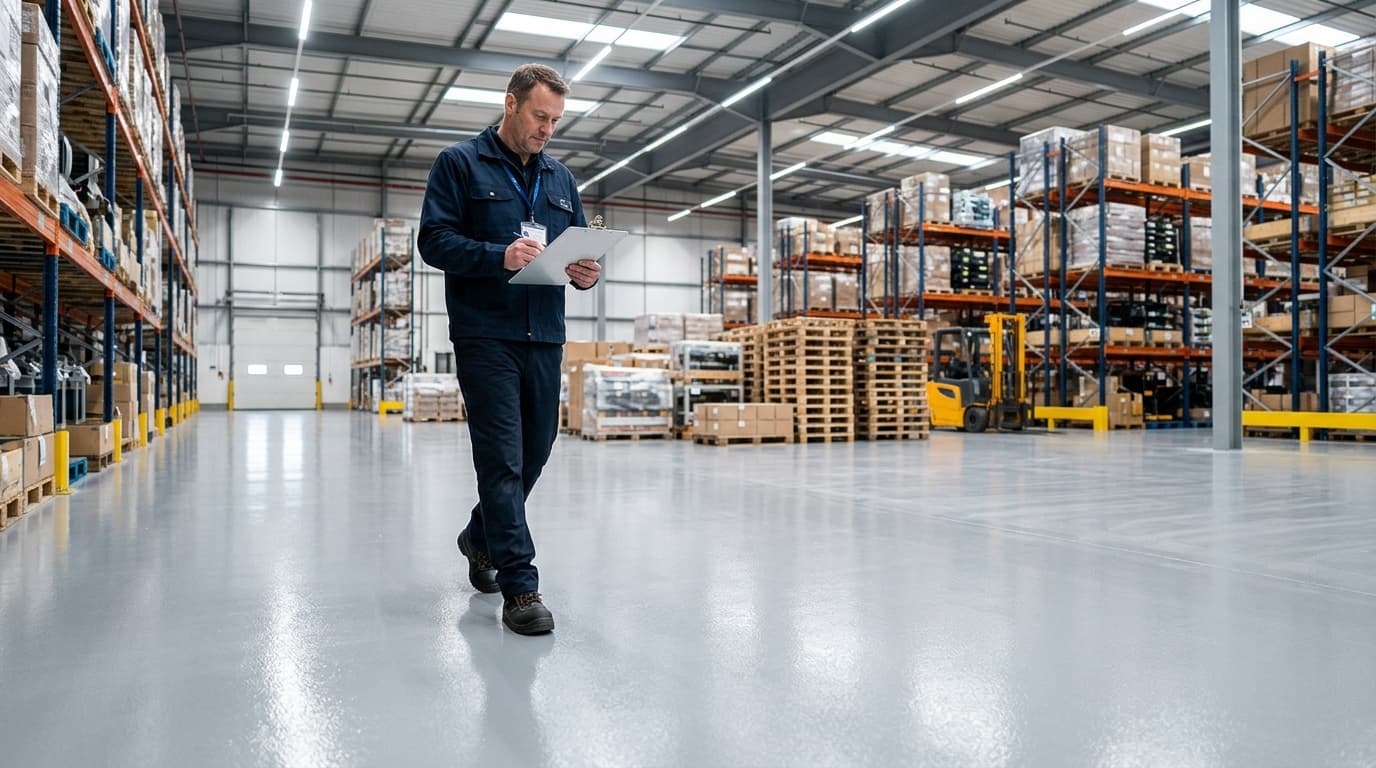
Regular commercial floor maintenance ensures safety, durability, and a polished appearance that reflects your company's professionalism. As the year winds down, it's the perfect time to evaluate your flooring before another year of heavy traffic, seasonal weather, and daily wear takes its toll.
Whether you operate a warehouse, retail space, auto shop, restaurant, or medical facility, this checklist will help you identify issues before they become expensive problems.
1. Inspect High-Traffic Areas
Start with the areas that take the most abuse. Entrances, loading docks, hallways, and any zones with heavy foot or vehicle traffic should be inspected for:
- ✓Surface cracks or chips in the concrete or existing coating.
- ✓Worn or faded coating that has lost its protective qualities.
- ✓Discoloration caused by chemical spills, oil, or cleaning products.
- ✓Uneven surfaces that could create trip hazards or equipment issues.
2. Deep Clean All Flooring Surfaces
A thorough year-end deep clean removes embedded dirt, grime, and chemical residue that regular cleaning may miss.
- ✓Sweep and vacuum all debris before wet cleaning.
- ✓Mop with neutral pH cleaners — harsh chemicals can damage protective coatings.
- ✓Use commercial floor scrubbers for large spaces to ensure even, thorough cleaning.
- ✓Pay extra attention to corners, edges, and areas under equipment where buildup accumulates.
3. Check for Moisture and Temperature Damage
Northern Ohio's winters create significant moisture and temperature challenges for commercial floors. Water intrusion from snow and ice tracked inside can seep beneath coatings, causing expansion, bubbling, or delamination.
Look for any areas where the coating appears to be lifting, bubbling, or showing white discoloration (efflorescence) — these are signs that moisture is getting beneath the surface and needs professional attention.
4. Reapply or Repair Floor Coatings
If your inspection reveals worn, damaged, or failing coatings, year-end is an excellent time to schedule repairs or a full recoat. Most commercial floor coating projects can be completed within one to three days, minimizing disruption to your operations.
For facilities with polyurea or polyaspartic coatings, spot repairs can often address localized damage without requiring a complete recoat. For older epoxy coatings showing widespread failure, upgrading to a polyurea system will provide significantly longer-lasting results.
5. Evaluate Safety and Compliance
Your year-end floor audit is also the right time to evaluate safety and OSHA compliance:
- ✓Check slip resistance in wet or oily areas — consider adding slip-resistant topcoats where needed.
- ✓Inspect safety line markings and walkway indicators for fading or wear.
- ✓Identify any uneven surfaces or trip hazards that need correction.
- ✓Verify that drainage systems near floor areas are functioning properly.
6. Schedule Preventive Maintenance for the New Year
Don't wait for problems to find you. For most commercial facilities, a professional inspection and cleaning should be done at least twice a year — once before winter and once in spring after the thaw.
Setting up a preventive maintenance schedule now means you'll start the new year with floors that are clean, safe, and fully protected. It's significantly cheaper to maintain a floor than to replace one.