
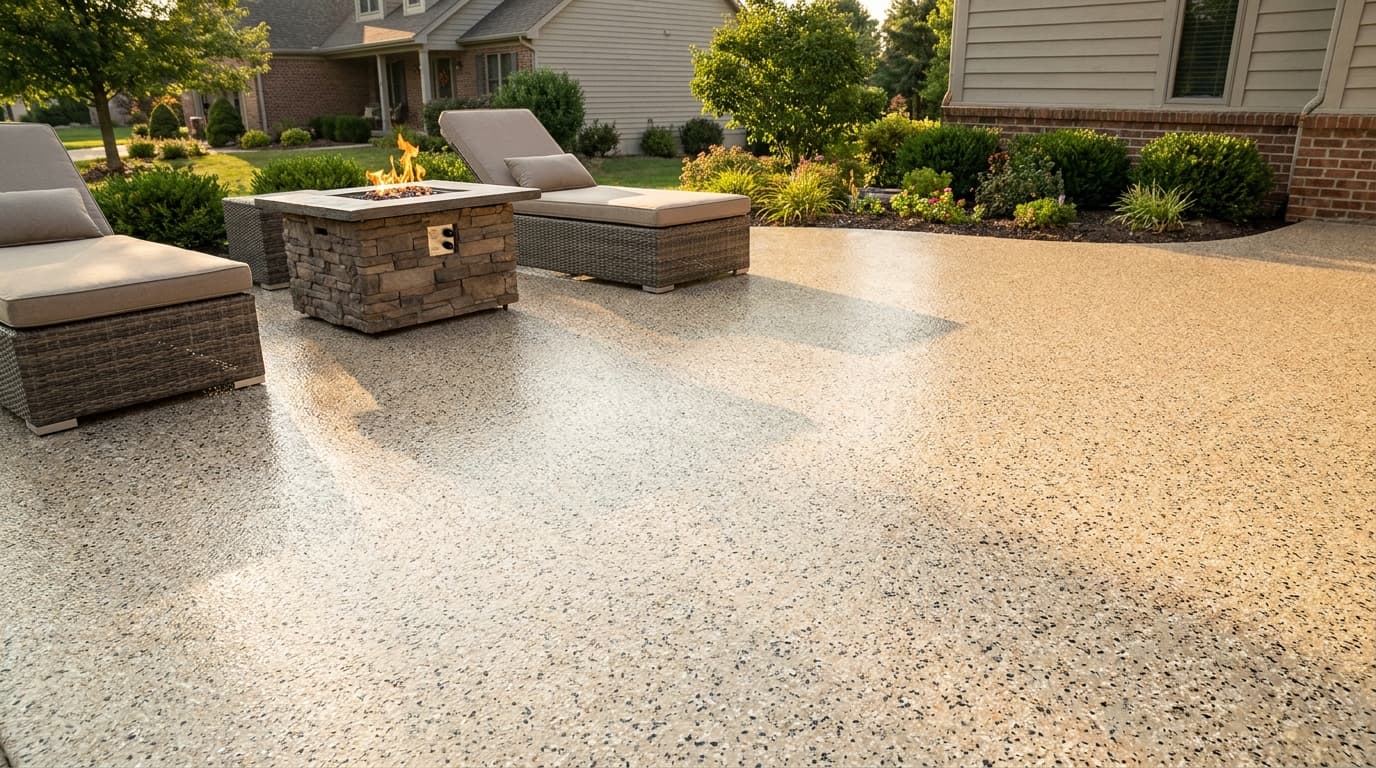
Diamond Concrete Coating's decorative patio product is a polyaspartic topcoat with a multi-color decorative flake broadcast over a polyurea base — we do not install stamped concrete. For a Northeast Ohio patio, a decorative polyaspartic flake system outperforms stamped concrete on every meaningful metric: it flexes through freeze-thaw instead of cracking, the UV-stable topcoat won't fade like stamped sealers, and it installs in a single day versus stamped concrete's multi-day cure. Expect $7–$10 per square foot installed with a 15-year warranty.
We get this comparison every spring from homeowners in Westlake, Medina, and the rest of Greater Cleveland: "I want a decorative patio. Should I stamp the concrete or coat it?" This guide gives you the honest answer — including the trade-off of why Diamond only installs flake, not stamping, and where each system actually fits.
What is a decorative polyaspartic flake system?
A decorative polyaspartic flake patio is a multi-layer coating system installed over your existing concrete slab. The sequence is straightforward: diamond-grind the surface, repair any cracks or pits, lay down a moisture-tolerant polyurea base coat, broadcast decorative color flake into the wet base while it's still tacky, then seal everything in with a UV-stable polyaspartic topcoat.
The finished surface reads as a rich, textured, granite-like floor — not a thin painted patio and not a sealer over bare concrete. The flake is what gives it the depth most homeowners associate with high-end architectural concrete. The polyaspartic topcoat is what makes it last 15+ years in Ohio's climate.
Total on-site time for a typical 300–500 sq ft back patio: one day. Light foot traffic that evening. Full furniture and grill back in place within 24 hours.
Flake blends, color palettes, and metallic-look flakes
Decorative flake is not one thing. It's a designed material you choose to fit your home — and the options are wider than most homeowners realize before they sit down with us.
Standard blends mimic granite, slate, and natural stone with warm tans, soft grays, and earth tones. Bolder palettes lean charcoal, black-and-silver, or rich espresso for modern patios and outdoor living spaces. Metallic-look flakes add a subtle shimmer that catches afternoon sun — popular on shaded patios and entryways where you want a little movement in the surface.
We bring physical flake samples to every estimate so you can see the blend on the actual concrete before you commit. Stamped concrete forces you to pick a pattern and a pigment off a brochure. Flake gives you a real material in your hands.
How does stamped concrete work (and why it struggles in Ohio)?
Stamped concrete is a finishing technique applied to fresh concrete, not a coating over an existing slab. The crew pours new concrete, broadcasts a color hardener and release agent across the surface, then presses rubber stamping mats into the wet concrete to imprint a pattern — flagstone, brick, slate, cobblestone, wood plank. After the concrete cures over several days, they seal it with a topical sealer.
It can look beautiful on day one. The problem is what happens after that first Ohio winter.
Stamped concrete has three structural weaknesses in Northeast Ohio. First, the slab itself is rigid — when freeze-thaw cycles flex the ground underneath, the concrete cracks, and the cracks telegraph straight through the decorative pattern. Second, the color is a surface treatment, not integral to the slab. Once the topical sealer wears or fades — typically within 2–3 years — the color goes with it and the pattern fades visibly. Third, the sealer itself has to be reapplied every 2–3 years just to keep the patio looking like it did when you paid for it.
Polyaspartic flake vs. stamped concrete — durability through freeze-thaw
This is the comparison that matters most for an Ohio patio. Greater Cleveland sees a hundred or more freeze-thaw cycles a year — overnight lows in the teens, sunny afternoons in the 40s, ground that expands and contracts every time.
Polyaspartic is flexible by design. The coating moves with the slab through that cycle without cracking. Even if a hairline crack eventually opens in the underlying concrete, the polyaspartic film bridges over it and the surface above stays continuous and watertight.
Stamped concrete is rigid by design. Decorative cuts (control joints disguised as pattern lines) are supposed to manage cracking, but in our experience walking NEO patios, they only manage some of it. Random cracks open across the pattern, and once water gets into those cracks and freezes, the damage compounds every winter.
We've coated a lot of patios for homeowners who paid for stamped concrete five to eight years ago and want it covered before it gets worse. For the chemistry behind why polyaspartic handles Ohio winters when other systems don't, our polyaspartic vs. epoxy cost comparison covers the technical side in depth.
What does each cost per square foot in Ohio?
Both systems land in roughly the same per-square-foot range up front — but the 15-year math is very different.
- ✓Decorative polyaspartic flake: $7–$10 per sq ft installed. One install, 15-year warranty against peeling, delamination, and material failure.
- ✓Stamped concrete (new pour): $8–$12 per sq ft installed in the Greater Cleveland market. Sealer must be reapplied every 2–3 years at $1–$2 per sq ft. Real-world durable life: 5–10 years before the pattern fades, cracks open, or a recoat/restamp is needed.
- ✓Sealer over existing stamped concrete (maintenance): $1–$2 per sq ft every 2–3 years for the life of the patio.
On a 400 sq ft back patio in Medina, that's $2,800–$4,000 for a polyaspartic flake floor that's done for 15 years versus $3,200–$4,800 for stamped concrete plus three to five sealer recoats and likely a major restoration somewhere in years 8–12. The flake system is the cheaper floor over time, by a meaningful margin.
Which flake blends mimic stamped aesthetics?
If the look of stamped concrete is what's pulling you toward it — the warm earth tones, the natural-stone feel, the high-end architectural read — flake can deliver the same aesthetic with none of the durability trade-offs.
Multi-color blends with warm tans, soft grays, and accent browns read very similarly to flagstone or slate stamping at normal viewing distance. Charcoal-and-silver blends mimic the look of bluestone. Espresso-toned blends approximate the depth of stained stamped concrete. The texture of the flake also hides minor slab imperfections that would otherwise telegraph through a thin sealer or a stamped overlay.
We bring sample boards to every estimate so you can hold the flake blend you're considering against the existing patio and the surrounding stone or hardscape. Most homeowners who came in wanting stamped concrete leave the meeting wanting flake once they see the side-by-side.
Can you put polyaspartic flake over an existing stamped or cracked patio?
Yes — as long as the underlying slab is structurally sound. If your existing stamped concrete has faded, lost its sealer, developed surface cracks, or just doesn't fit the look of the house anymore, we can grind the surface flat and install a fresh polyaspartic flake system on top.
The process is the same as a standard install with one extra step: we diamond-grind the stamped surface aggressively to remove old sealer, knock down the high points of the stamp pattern, and create a clean, flat profile for the coating to bond to. After that, the polyurea base, decorative flake broadcast, and polyaspartic topcoat go down exactly as they would on any other patio.
Cracks get filled and leveled during prep. We use Diamond's Liquid Metal crack-filling product for anything wider than a hairline. The finished surface reads as continuous and flat — you won't see the stamp pattern or the old cracks underneath.
Installation timeline: one-day flake vs. multi-day stamping
Time matters for an outdoor space you actually want to use this summer. The contrast here is stark.
A decorative polyaspartic flake patio installs in a single day. Our crew arrives in the morning, grinds and preps the slab, repairs cracks and joints, lays the polyurea base coat with a full flake broadcast by mid-afternoon, then seals everything in with a UV-stable polyaspartic topcoat. You can walk on it that evening and have furniture back on it within 24 hours.
Stamped concrete is a multi-day project at minimum. Day one is form-up, pour, color hardener, release agent, and stamping while the concrete is still workable. Then the slab needs 7 days minimum of cure time before any foot traffic, and most contractors recommend 28 days before heavy use or sealer application. The decorative sealer is a separate trip on top of that.
If you're trying to get a patio ready for a Memorial Day cookout or a Fourth of July weekend, a flake system is the only realistic option.
Why Diamond only installs polyaspartic flake — the honest tradeoff
We don't install stamped concrete. We're not going to pretend that's because stamping has no place anywhere — it can look great in the right climate on the right project. But for a Northeast Ohio patio that has to survive lake-effect winters, road-salt overspray, and 100+ freeze-thaw cycles a year, the math doesn't work for the homeowner.
Stamped concrete in our market means accepting a 5–10 year aesthetic life, recurring sealer maintenance, eventual cracking through the pattern, and a slab that gets harder to refresh every cycle. We've walked too many of those patios for homeowners who didn't get told that going in.
Polyaspartic flake gives you the decorative look, the texture, the high-end finish — and a 15-year warranty that says we stand behind it. If the look of natural stone is what you want, you can get it with a system that actually lasts in Ohio. Our outdoor patios and entryways service page covers the full product, the prep, and the warranty in detail.
That's the honest tradeoff. Less aesthetic flexibility on the front end (we work in flake, not stamp patterns), but a floor that's still looking like a finished floor when the stamped patio next door is on its third sealer recoat.
Frequently Asked Questions
Does Diamond Concrete Coating install stamped concrete?
No. Diamond exclusively installs polyaspartic coatings with decorative flake broadcasts over a polyurea base. Our decorative look is achieved through flake blends, solid colors, and designer palettes — not stamping. We made that choice because in Northeast Ohio's climate, polyaspartic flake outlasts stamped concrete by a wide margin, and we'd rather install one floor that's still under warranty in year 15 than two floors that need maintenance every other spring.
Can a polyaspartic flake patio look decorative like stamped concrete?
Yes. Multi-color flake blends and metallic-look flakes produce a rich, textured, high-end finish that reads as custom architectural concrete from any normal viewing distance. Warm earth-tone blends mimic flagstone and slate. Charcoal-and-silver blends mimic bluestone. The flake also hides minor slab imperfections that would telegraph through a thin sealer or a stamped overlay.
Is polyaspartic flake more expensive than stamped concrete?
They're comparable up front — both run $7–$10 per square foot installed in the Greater Cleveland market, with stamped concrete sometimes pushing higher on complex patterns. The difference is what happens after. Polyaspartic carries a 15-year warranty and needs no recurring maintenance. Stamped concrete needs a sealer reapplication every 2–3 years, and most stamped patios in our market need a major refresh somewhere in years 5–10. Over a 15-year window, the flake system is the cheaper patio.
Will my patio crack through Ohio freeze-thaw?
Polyaspartic flexes with the slab as it expands and contracts through Ohio's freeze-thaw cycles, so the finished surface stays continuous even if a hairline crack develops underneath. Stamped concrete is rigid and prone to freeze-thaw cracking in NEO — cracks open across the pattern, telegraph the damage, and let water in for the next cycle. If long-term crack resistance matters to you, polyaspartic is the system to install.
Can Diamond coat over my existing stamped concrete patio?
Yes, as long as the underlying slab is structurally sound. We diamond-grind the stamped surface to remove old sealer and flatten the stamp pattern, repair any cracks with our Liquid Metal product, then install the full polyaspartic flake system on top. The finished surface reads as flat and continuous — you won't see the stamp pattern or the old wear underneath. We'll evaluate your specific patio on the free on-site estimate.
How long before I can use my patio?
Polyaspartic flake: light foot traffic that evening, full furniture and grill use the next day. Stamped concrete: 7 days minimum before any foot traffic and 28 days before heavy use or sealer application. If you're trying to have a usable patio for a specific summer date, flake is the only system that fits a tight timeline.
Get a Free Decorative Patio Estimate in Greater Cleveland
If you're planning a patio refresh for this summer and you're weighing decorative options, we'll show you flake samples on your actual concrete and give you an honest, flat-rate price. Diamond Concrete Coating serves homeowners throughout Greater Cleveland, Cuyahoga County, Medina County, and Summit County with polyaspartic flake patios installed in a single day and backed by a 15-year warranty.
Planning a patio project? Get a free decorative polyaspartic flake estimate before summer books up — call 440-821-7220.