
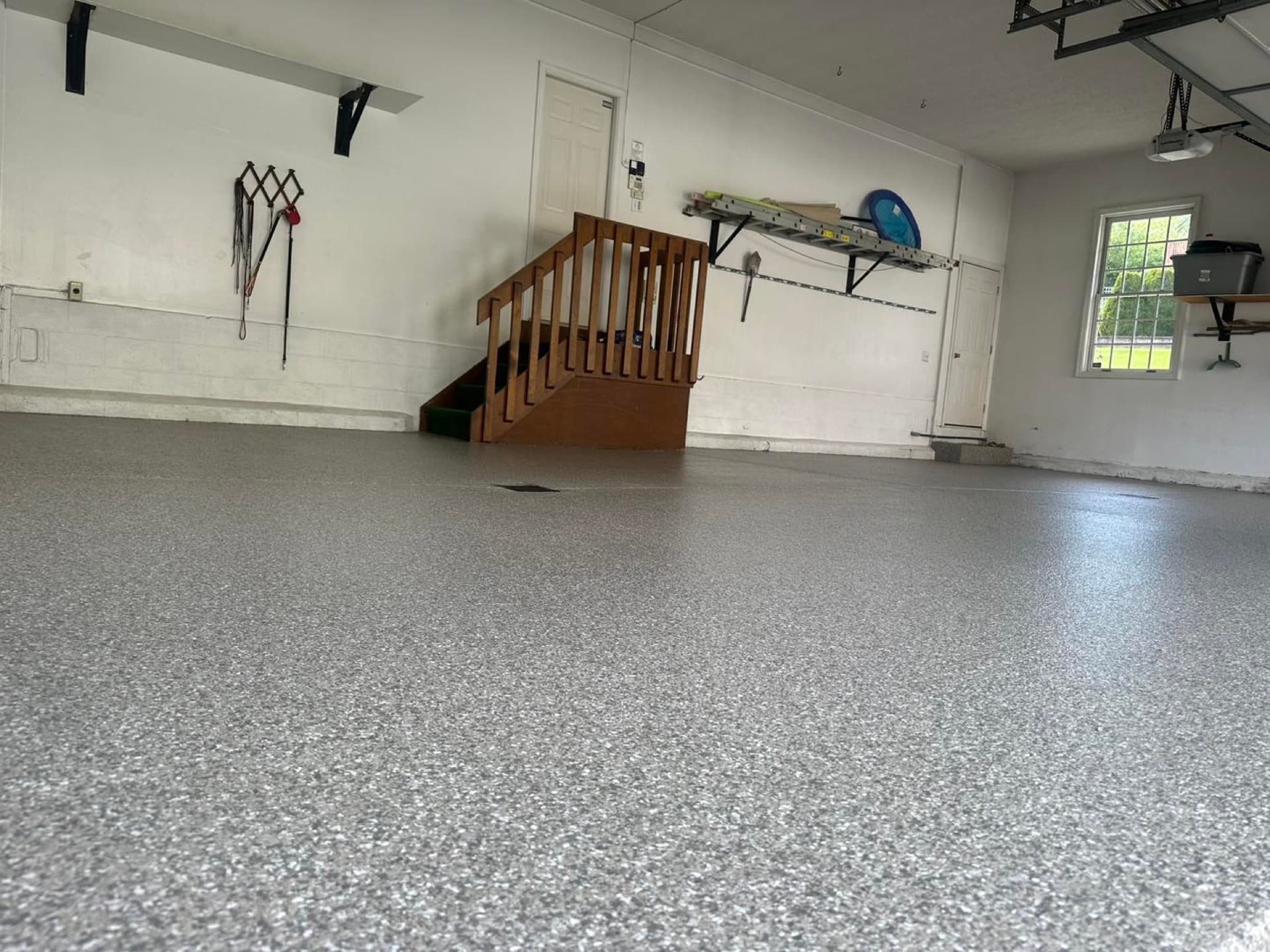
Most garage floors are built with a gentle slope toward the door or a floor drain, so meltwater runs off instead of sitting. When a floor puddles, it's usually because of low spots, settlement or a slope that never quite worked. A polyaspartic coating doesn't change the slope, but it changes what the water does: the concrete is sealed, so meltwater stays on top of the floor instead of soaking in, and it squeegees off a smooth surface in seconds. It costs $7–$10 per square foot installed.
Every Northeast Ohio winter, cars bring snow, slush and road brine into the garage, and all of it melts on the floor. If the water runs out the door, great. If it collects in the same spots every day, it carries salt into the concrete and keeps the slab damp for weeks. This guide explains why garage floors puddle, why that matters for bare concrete, what a coating does and doesn't do about it, and when the fix is someone else's job.
How is a garage floor supposed to drain?
Most garage slabs are poured with a slight pitch toward the overhead door, so water runs out onto the driveway. Some garages also have a floor drain or a trench drain, with the floor sloped toward it. Either way the idea is the same: melting snow should move off the slab on its own.
That slope is built into the concrete when it's poured. It's a property of the slab itself, not of whatever sits on top of it, which matters when you're deciding what will actually help.
Why does a garage floor puddle?
Puddles that form in the same place every winter usually come from one of four things.
Low spots. Concrete is never perfectly flat, and shallow dips that were there from the day it was poured hold water instead of letting it run.
Settlement. Over the years, parts of a slab can sink as the soil underneath compacts or washes out. The apron at the door is a common spot, and once it settles, the floor can tip water back toward the garage instead of out of it.
Surface damage. Pitting and scaling from road salt leave a rough, porous surface that holds water and slush instead of shedding it.
Drains that don't keep up. A floor drain only helps if the floor around it actually falls toward it and the drain itself is clear and working.
Why does standing meltwater matter on bare concrete?
Bare concrete is porous. Salty meltwater that sits on it soaks in, and as it dries, salt crystals form inside the surface and break it apart from within. Calcium chloride brine also pulls moisture out of the air, so a slab that puddles stays damp long after the snow is gone.
Freeze-thaw makes it worse, because water that has soaked into the concrete expands every time it freezes. That's where the pitting, scaling and white crust near the door come from. Our guide to repairing a salt-damaged garage floor shows that damage up close.
What does a polyaspartic coating do about meltwater?
A polyaspartic system seals the whole slab. After diamond grinding and crack and joint repair, a moisture-tolerant base coat, decorative flake and a UV-stable polyaspartic topcoat go down wall to wall. From then on, meltwater, brine and oil sit on top of a sealed surface instead of soaking into the concrete.
That changes three things in winter. Salt can't work its way into the slab, so the damage puddles cause on bare concrete stops. Water and slush squeegee off a smooth floor instead of sitting in pits and pores. And dried salt film rinses off the surface instead of soaking in. Our garage floor coating service page covers the full system.
The repair step helps too. Filling pits and cracks before the coating goes down removes the rough, porous patches where slush likes to sit.
What can't a coating fix?
A coating follows the slab it's applied to. It doesn't change the slope, raise a settled section or add a drain. If your floor tips water toward the back wall today, it will still tip water toward the back wall after it's coated. The difference is that the water will sit on a sealed surface instead of soaking into the concrete.
Diamond Concrete Coating coats floors. We don't regrade slabs, lift settled concrete or install drains. If your puddling comes from settlement or a slope that sends water the wrong way, that's work for a concrete or drainage contractor, ideally done before the floor is coated. If that's what we see on the estimate, we'll tell you straight.
In most garages, though, the puddles come from minor low spots and a worn surface, and that's exactly the situation a sealed, easy-to-clean floor handles well. Containment mats are another way to keep slush in check, and our comparison of garage floor mats vs. a polyaspartic coating explains how the two work together.
What does a coating cost?
A polyaspartic garage floor costs $7–$10 per square foot installed, including diamond grinding, crack and joint repair, the base coat, flake, the UV-stable topcoat and a 15-year written, transferable warranty covering peeling, delamination and material failure. Your exact price depends on the size and condition of your slab and comes as a flat-rate quote at a free on-site estimate.
We serve homeowners across Greater Cleveland, from Cleveland itself to Summit and Medina counties. If your garage is an older one, our guide to coating older and detached garages in Lakewood covers what that kind of slab needs.
Frequently Asked Questions
Will a coating fix a garage floor that puddles?
It won't change the slope, so water will still collect where it collects today. What changes is that the water sits on a sealed surface instead of soaking into the concrete, and it squeegees off quickly.
Can you add a floor drain or fix the slope?
No. Diamond Concrete Coating coats floors; we don't regrade slabs or install drains. If your floor needs that kind of work, a concrete or drainage contractor should do it before the floor is coated.
Why does my garage floor stay wet for days?
Bare concrete is porous, and calcium chloride brine pulls moisture from the air. Salty meltwater soaks into the slab and keeps it damp long after the snow melts. A sealed floor keeps that water on the surface.
Is a coated garage floor slippery when wet?
Any smooth floor gets slicker when it's wet. The flake broadcast adds texture, and we can go over slip-resistance options for the topcoat during your free estimate.
Does a coating help with salt damage from puddles?
Yes. Once the slab is sealed, salty water can't soak in, so it can't keep breaking down the surface. Existing pitting is ground and repaired before the coating goes down.
See What a Sealed Floor Would Change in Your Garage
Book a free on-site estimate and we'll tell you straight what a coating will and won't fix — call 440-821-7220.