
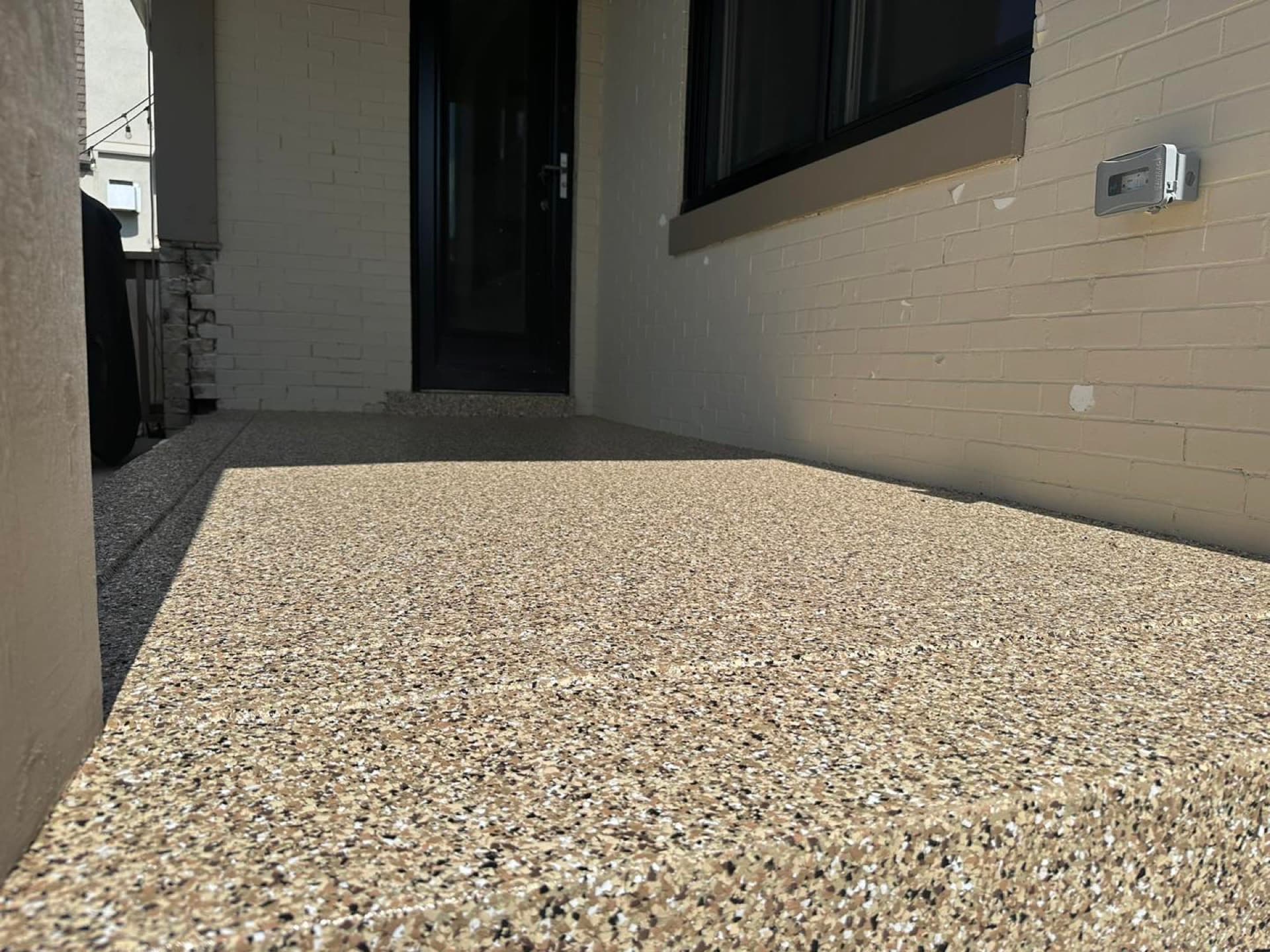
Cleaning a polyaspartic garage floor is simple: sweep or dust-mop it regularly, wash it with warm water and a neutral-pH cleaner when it needs more, wipe up oil and fluids promptly, and rinse off salt film a few times a winter. Skip harsh solvents and acidic cleaners. Because the floor is sealed, dirt, brine and spills sit on the surface instead of soaking into concrete, so a few minutes of care goes a long way.
This guide is for homeowners who already have a coated floor, whether you're in Parma or Akron, and for anyone who wants to know what living with one looks like before booking an estimate. It covers routine cleaning, Northeast Ohio salt season, spills and stains, what to keep off the floor, and when it's worth calling us.
How often should you clean a coated garage floor?
Sweep or dust-mop every week or two, or whenever grit builds up. Sand and road grit are what wear on any floor's finish over time, because they get ground in under tires and shoes.
Wash the floor when sweeping isn't enough. For most garages that's every month or so in summer and more often in salt season. A simple routine:
- ✓Sweep or dust-mop first, so you're not pushing grit around.
- ✓Mop with warm water and a neutral-pH cleaner.
- ✓Work toward the door or a floor drain, and squeegee the dirty water out.
- ✓Rinse with clean water if the cleaner leaves a film, then let the floor air-dry.
That's it. A sealed floor doesn't need waxing, resealing or special products. Our garage floor coating service page explains the system underneath.
How do you handle road salt in winter?
Salt season is when a coated floor earns its keep. Brine and slush sit on top of the sealed surface instead of soaking into concrete, but as the water evaporates it leaves a pale film of dried salt behind. The film is cosmetic, but it's worth rinsing off a few times a winter so it doesn't get tracked into the house.
- ✓Squeegee standing slush toward the door or drain after big snow days.
- ✓Rinse with plain water to lift dried salt film, then squeegee it out.
- ✓For heavy buildup, follow the rinse with a neutral-pH wash.
- ✓Keep a containment mat under each car if you park inside every day.
Our comparison of garage floor mats vs. a polyaspartic coating explains why mats work best on top of a coated floor rather than instead of one. And if water collects in the same spots every winter, our guide to garage floor drainage and meltwater explains why.
How do you clean oil, fluids and stains?
Wipe up oil, antifreeze, brake fluid and gas as soon as you notice them, using a rag or an absorbent. The topcoat resists chemicals, which buys you time, but the sooner a spill comes up, the easier it is.
For dried drips, wash the spot with warm water, a neutral-pH cleaner and a soft brush. Tire marks usually come up the same way.
Rust marks from metal shelving or tools, and anything that has sat on the floor for weeks, can take more effort. If a mark won't come up with a gentle cleaner, call us before reaching for something stronger.
What should you avoid?
Harsh solvents and acidic cleaners. A sealed floor doesn't need them, and they aren't worth the risk to the finish. Stick with neutral-pH products.
Abrasive pads and wire brushes. A soft brush or a mop is all a sealed surface needs.
Dragging heavy or sharp things. Lift or roll heavy equipment, and set jack stands and anything with metal feet on a piece of plywood or a rubber pad.
Letting grit pile up. Regular sweeping does more for the finish than any cleaner.
How does care relate to the warranty?
Every residential install is backed by a 15-year written, transferable warranty covering peeling, delamination and material failure. Routine care is about keeping the floor looking its best day to day; the warranty is about the coating itself. If you're choosing a color for a new floor, our guide to garage floor colors that hide salt, dirt and tire marks shows which blends make everyday mess least visible.
When should you call Diamond?
If you see anything that looks like peeling, lifting at an edge, or damage that won't clean up, call us and we'll take a look. The same goes for stains you can't identify. It's better to ask than to experiment with strong chemicals.
If you don't have a coated floor yet, a polyaspartic system costs $7–$10 per square foot installed, with the exact price depending on your slab's size and condition and given as a flat-rate quote at a free on-site estimate.
Frequently Asked Questions
What is the best cleaner for a polyaspartic garage floor?
Warm water and a neutral-pH cleaner. Skip harsh solvents and acidic cleaners; a sealed floor doesn't need them.
How do you get salt off a coated garage floor?
Rinse with plain water and squeegee it out. For heavy buildup, follow with a neutral-pH wash. A few times a winter is usually enough.
Can you mop a polyaspartic floor?
Yes. A mop or soft brush with warm water and a neutral-pH cleaner is all the floor needs.
Do oil stains come out of a coated floor?
Fresh spills wipe up easily because the topcoat resists chemicals. Dried drips usually come up with warm water, a neutral-pH cleaner and a soft brush.
Should I still use mats on a coated floor?
Containment mats under each car help in salt season by catching the bulk of the slush. The coating protects the rest of the floor.
What should I do if my coating looks damaged?
Call us at 440-821-7220. Every residential install carries a 15-year written, transferable warranty covering peeling, delamination and material failure.
Questions About Your Coated Floor
Questions about caring for your floor, or ready for a free on-site estimate? Call 440-821-7220.