
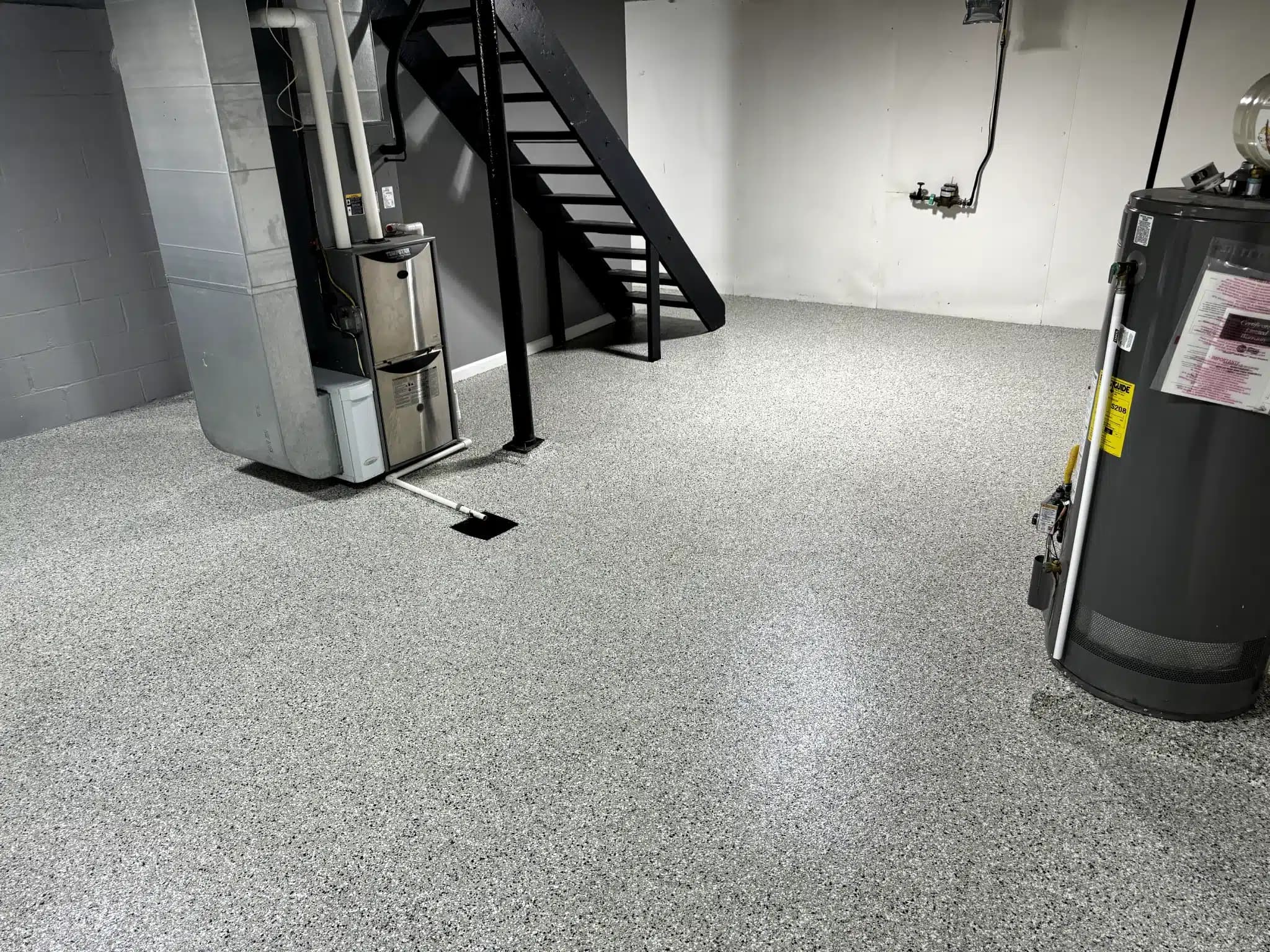
The garage floor colors that hide the most are mid-tone, multi-color flake blends — a mix of light, medium and dark chips in gray or tan. In an Ohio garage, that mix disguises dried road salt, sand and dust (light specks) and tire marks and grime (dark specks) at the same time. Solid colors show everything, very dark floors show salt film, and very light floors show tire marks. From our standard colors, River Rock, Smoke, Slatestone, Domino, Driftwood and Cabin Fever are the safest bets for a garage you park in every day.
Color is the fun part of a garage floor, and it's also the part people most often second-guess. A floor that looked perfect on a sample board can show every salt streak by February. This guide explains what makes a color forgiving, which flake blends work best for a busy garage in Cleveland, Akron or anywhere in between, and how to choose with confidence.
What actually shows up on an Ohio garage floor?
Three kinds of mess, and they don't look the same:
- ✓Dried salt and brine — a white or pale gray film and crust, worst near the door and under the cars from December through March.
- ✓Dirt, sand and dust — light tan and gray specks tracked in from the driveway, plus the grit that comes off the roads with the salt.
- ✓Tire marks and grime — dark rubber marks where you turn the wheel or park, plus oil spots and road grime.
Light mess hides on light floors. Dark mess hides on dark floors. An Ohio garage gets both, which is why the most forgiving floors aren't light or dark — they're mixed.
Why does multi-color flake hide more than a solid color?
A solid color is one flat surface, so anything on it stands out against a uniform background. A flake floor is made of thousands of chips in several shades. A salt speck lands next to a light chip, a tire smudge lands next to a dark one, and your eye reads all of it as part of the pattern.
How densely the flake is broadcast matters as much as the colors. A full broadcast, where the base coat is completely covered in flake, gives the most camouflage. A lighter broadcast that lets the base color show through looks more modern but hides less. For a garage that sees daily winter traffic, full flake is the practical choice. Our garage floor coating service page explains how the flake layer fits into the full system.
Which flake colors hide the most?
These are the blends from our standard lineup that we would point a busy Ohio garage toward first. You can see every one of them on our floor color page.
- ✓River Rock — a mixed gray river-bed blend. Plenty of light and dark chips, so it hides salt film and tire marks about equally well.
- ✓Smoke — medium gray with subtle charcoal flecks. A calm mid-tone that doesn't show light dust or dark scuffs easily.
- ✓Slatestone — layered slate gray with a natural stone feel. Mid-to-dark, and good at hiding grime and tire marks.
- ✓Domino — a classic black-and-white speckle. The high contrast hides specks of both colors.
- ✓Driftwood — weathered tan with gray accents. A warm mid-tone that hides tracked-in sand and dirt.
- ✓Cabin Fever — rustic tan with black. A warm option with enough dark chips to hide tire marks.
What about very dark or very light floors?
Dark blends like Fortress, a deep charcoal, are excellent at hiding dirt and tire marks, and they look sharp. The trade-off in Ohio is salt: dried brine shows up as a pale film on a dark floor, so plan on rinsing more often in winter. If you love a dark floor and don't mind a quick rinse after a heavy salt week, it's a great choice.
Light blends like Fog and Pebble Beach brighten a dim garage dramatically, which is a big plus in an older garage with a single light fixture. They hide salt film well, but dark tire marks and oil spots stand out. Light floors suit garages used more as a workshop, gym or showroom than as a daily parking spot.
Bold colors like Cardinal or Blue Jay are best saved for shops, showrooms and garages where the floor is the feature and gets cleaned often.
How should you choose your garage floor color?
Start with how you use the garage. Two cars in and out every winter day: stick with a mid-tone multi-color blend. Mostly a workshop or home gym: a lighter blend brightens the space. A showpiece garage: go bold or dark and plan to clean a little more often.
Then match the house, not just the mess. Warm blends like Driftwood and Cabin Fever pair well with tan siding, brick and wood cabinets. Gray blends like Smoke, River Rock and Domino suit white walls, gray cabinets and modern garages.
Finally, look at real samples in your own garage. The same blend can read warmer or cooler under LED shop lights than in daylight, so judge it where it will live. We can bring physical samples to your free estimate. Choosing between our standard blends doesn't change your price: it's $7–$10 per square foot installed either way, and the exact figure depends on the size and condition of your slab. Our polyaspartic garage floor cost guide covers what does move a quote.
Does any color make a garage floor maintenance-free?
No, and we would be wary of anyone who says otherwise. The right color makes everyday mess far less visible, but salt still needs rinsing off a few times a winter, and oil drips still need wiping up. The good news is that on a sealed polyaspartic floor, all of that sits on the surface and cleans up with a squeegee, a mop and plain water.
If winter slush is your biggest headache, a containment mat under each car helps too. Our comparison of garage floor mats vs. a polyaspartic coating explains how the two work together.
Frequently Asked Questions
What is the best garage floor color for hiding dirt?
A mid-tone, multi-color flake blend in gray or tan. Blends like River Rock, Smoke and Driftwood mix light and dark chips, so both light dust and dark grime blend into the pattern.
What color garage floor hides tire marks best?
Darker and mid-tone blends. Fortress, a deep charcoal, hides tire marks very well, and Slatestone and Domino do a good job too. Very light floors like Fog show tire marks the most.
Do dark garage floors show road salt?
More than mid-tones do. Dried road salt leaves a pale film that stands out on a dark floor. It rinses off easily with plain water, but expect to rinse more often in winter.
Does the flake color change the price?
No. Choosing between our standard flake blends does not change your price. It is $7–$10 per square foot installed either way, and your exact flat-rate quote depends on the size and condition of your slab. If you want a custom blend, ask about it during your free on-site estimate.
Can I see the colors before I choose?
Yes. Every standard blend is on our color page, and we can bring physical samples to your free estimate so you can see them in your own garage light.
Will my garage floor color yellow in the sun?
No. The topcoat is UV-stable polyaspartic, so it will not yellow in sunlight coming through an open garage door the way epoxy does.
See the Colors in Your Own Garage
Want to see the blends in your own garage light? Call 440-821-7220 for a free on-site estimate.